SINT MAARTEN (GREAT BAY) - Following the conclusion of its first session of a fisheries incentive program in 2025, which compensated artisanal fishers with equipment and services, the Nature Foundation Sint Maarten (NFSXM) is continuing to build ocean literacy on the island through additional workshops, fishery monitoring, material creation, and governmental advice. The conservation non-profit is working closely with the fisheries sector to improve outcomes for marine species while supporting artisanal fisheries development.
Workshops and fishery monitoring
In August, the Foundation completed another session of its in-house workshop series for fishers. Like in 2025, participants in the 2026 session will receive equipment of their choosing to support sustainable and safe fishing, including boat pumps, fishfinders, and boat winches.
The five 2026 graduates, all Sint Maarten-based fishers who practice a variety of techniques, were recruited following extensive stakeholder engagement. The workshops covered local marine biodiversity and the current threats facing ecosystems and fisheries.
Participants also took part in solutions-oriented sessions on defining Sint Maarten’s artisanal fishery, co-developing ideas for collaborative projects with the Foundation, and logging and validating the island's fishery history.
The Foundation has also launched an incentivized pilot fishery monitoring program with graduates from both sessions to build understanding of the benefits of, and need for, long-term fish stock assessments.
Data collected include fish species, weight, and length; equipment use; catch effort; and interactions with sharks and rays. Participating vendors at the Simpson Bay Fish Market have also been trained to support Foundation staff as Fishery Monitoring Officers (FMOs). A sufficiently robust dataset can show how specific fish stocks are faring and how the effort fishers invest in each catch is changing, and, in turn, help make evidence-based recommendations for how to protect both stocks and livelihoods.
"I’ve always let the Nature Foundation know how much I appreciate being part of this program, especially the workshops and the fish monitoring activities,” said graduate Kevin Jacob. “It has been a great experience and I’m grateful for the opportunity to be involved and learn more through the program.”
Market and catch resources
Over the past year, the Nature Foundation has funded the design and installation of educational signage and materials at the fish market. Large signs show commercially caught and protected species, alongside multilingual flyers on fisheries and marine protection policies.
3D-printed lobster and conch measurement gauges were also produced and distributed to fishers and vendors free of charge. The Foundation developed these materials in close collaboration with these stakeholders to raise awareness of existing policies and help consumers make more informed purchasing decisions.
“We have dealt mainly with [Senior Conservation Advisor] Sabrine, and she has provided us with many important artifacts that have been educational for us as well as visitors to our island,” stated Sharon Halley, a vendor at the Simpson Bay Fish Market. “Overall, I can say the material and educational content provided to us has been extremely beneficial. It is always a pleasure working with them.”
Presence in fisheries events
The Foundation also worked with the Sint Maarten Entrepreneurship Development Center (SEDC) to implement its Introduction to Sustainable Fishing Level 1 program through the Advanced Education Program (AEP) in September.
Staff member Sabrine Brismeur delivered a two-night lecture to twenty current and prospective fishers and provided technical support for the following session led by Lee Lake, an experienced trap fisherman.
Nature Foundation staff also delivered a presentation and led a tour for the regional Dutch Caribbean Agriculture, Livestock and Fisheries Association (DC-ALFA) Conference, which was hosted on Sint Maarten in late May.
Fish Aggregation Devices
Finally, the Foundation advised on the management of three Fish Aggregation Devices (FADs) that the Government of Curaçao donated to the Ministry of Tourism, Economic Affairs, Transport and Telecommunications (TEATT) this year.
The Foundation supports the current FAD program, in which government-managed floating offshore structures are deployed with an anchor to attract pelagic, migratory species such as mahi-mahi and tuna. FADs can give fishers alternative, more reliable and sustainable targets and may ease pressure on Sint Maarten's struggling coral reef fish.
The non-profit’s strong fishery focus in the last year has been financially supported by the MENAA (Marine Elasmobranch Nursery Area Advocacy) project. MENAA is funded by BESTLIFE2030 (Biodiversity and Ecosystem Services in Territories of European Overseas), a granting mechanism focusing on preserving and restoring biodiversity in the EU’s outermost regions (ORs) and Overseas Countries and Territories (OCTs), which host rich biodiversity but also face significant climate change threats. Learn more at https://naturefoundationsxm.org/nfprojects/menaa/.
“Our ongoing work with the fisheries sector has been unbelievably rewarding,” said the Nature Foundation. “Though there is still a lot of work to do, we are enthusiastic about our progress so far, and we’re looking forward to a future of much collaboration."
Co-funded by the European Union. Views and opinions expressed are, however, those of the author(s) only and do not necessarily reflect those of the European Union or CINEA. Neither the European Union nor the granting authority can be held responsible for them.
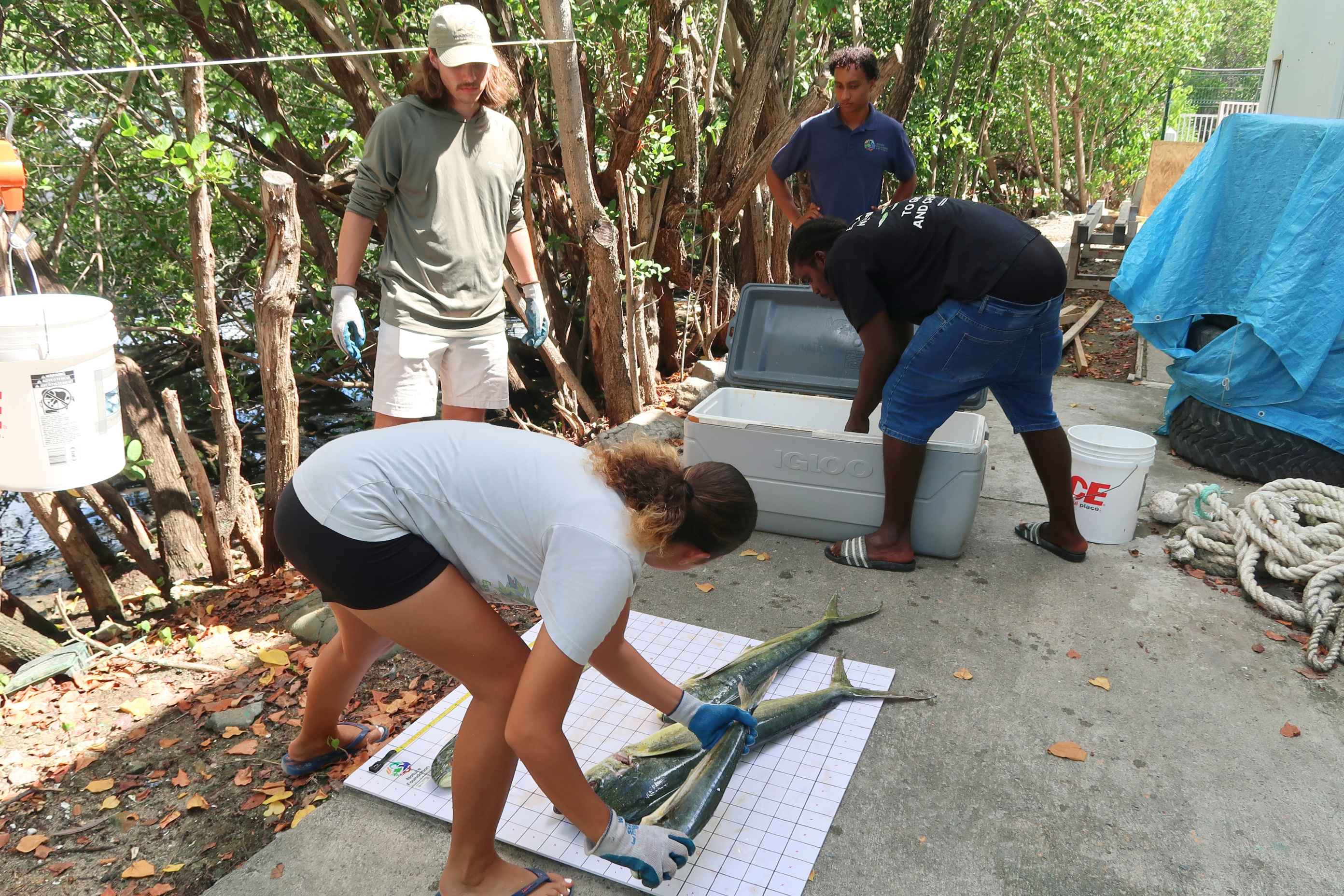
A local fisher participates in monitoring his catch with NFSXM staff and interns | Photo credit: NFSXM
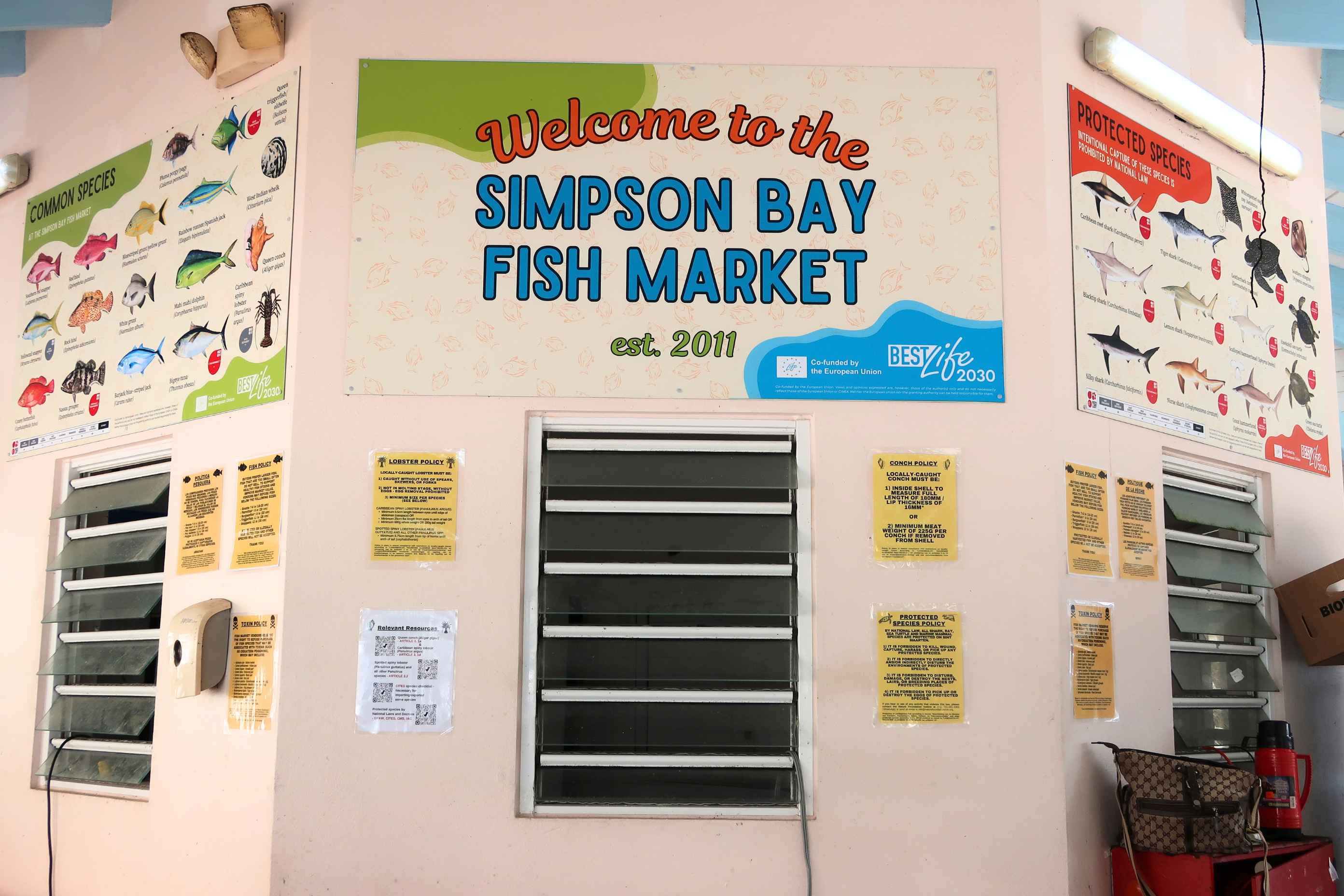
Signage and materials at the Simpson Bay Fish Market were financed by NFSXM and developed from requests and input from vendors and fishers | Photo credit: NFSXM